The Uncomfortable Truth About Program Economics and Viability
Academic Portfolio Reality
Most programs don’t fail from low enrollment. They fail from math no one runs.
That sentence lands hard in rooms full of provosts and presidents, and it should. I work with institutional leaders on portfolio decisions. The pattern repeats at every institution I advise. Leaders avoid the economics. Then someone outside, a board member, an accreditor, a legislator, forces the conversation they should have started themselves.
This article is the conversation starter. It covers the mistakes, the myths, the averaging habit that hides the damage, and the objections that keep leaders studying what they already know.
The Three Costly Mistakes
Program economics fails in predictable ways. Three mistakes show up more than any others.
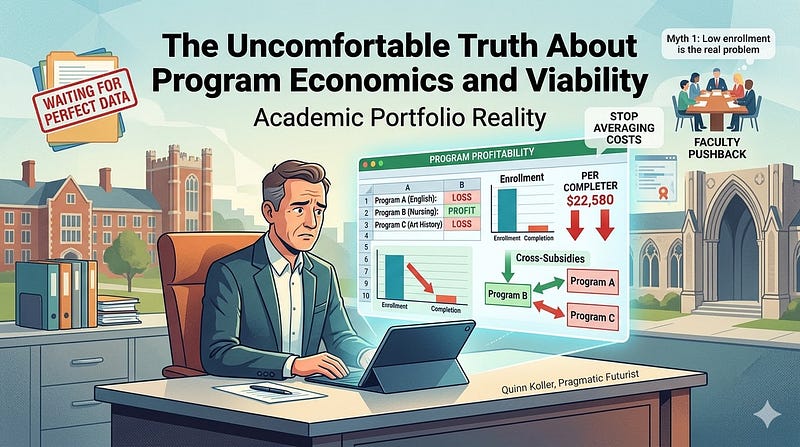
Counting heads instead of dollars. Eighty students sounds healthy. But completion is low. Cost per graduate is high. That program loses money every term. Enrollment alone tells a misleading story. A program that enrolls 100 and graduates 12 costs more per degree than one that enrolls 30 and graduates 25. The metric that matters is cost per completer, not headcount on the first day of class.
Subsidizing without knowing it. Strong programs quietly fund weak ones. No one maps the cross-subsidies. Cuts to “small” programs get fought hard. The programs funding them get ignored. This is not a budgeting error. It is a structural blind spot that compounds every fiscal year.
Waiting for perfect data. Leaders delay because numbers “aren’t clean.” They never will be. Waiting for perfect data costs the window for action. Good-enough data was always enough. Enrollment trends, completion rates, cost per section. None of that is hidden. Clean enough beats perfect every time.
Each of these mistakes feels reasonable in the moment. That is precisely why they persist.
Five Myths That Sound Like Good Judgment
Leaders repeat certain beliefs about program economics because those beliefs sound careful. They sound like good judgment. That is what makes them expensive.
Myth 1: “Low enrollment is the real problem.” Low completion is worse. A program can enroll enough students and still hemorrhage money if most of them never finish. Per-completer cost is the number that tells the truth. Enrollment is just the beginning of the story.
Myth 2: “Small programs are cheap to keep.” Small programs carry fixed costs. Faculty lines. Accreditation. Advising. Course releases. “Small” is never as cheap as it looks on paper. The overhead stays whether you have eight students or eighty.
Myth 3: “Better marketing will fix it.” Marketing fills seats. It does not fix margins. If the cost structure is broken, more students make the loss bigger. Marketing is an accelerant. It amplifies whatever economics already exist, good or bad.
Myth 4: “We need more data before deciding.” The data is there. The will to act on it is not. “More data” is how institutions buy time without saying so. Another study. Another task force. Another semester passes. Nothing changes.
Myth 5: “Cutting programs signals failure.” Keeping programs that lose money signals something worse. Boards and accreditors read delay as avoidance, not caution. Decisive portfolio management signals institutional health. Inaction signals the opposite.
These myths survive because they feel responsible. But comfort is not the same as strategy.
The Averaging Trap
Most schools average costs across every program. That single habit masks the real damage.
The first thing I ask for when working with a president or provost on portfolio decisions is per-program math. Almost no one has it ready.
Here is the tip. Stop averaging.
Pull these numbers for each program individually: cost per completer, not per enrollee. Revenue per completer after discounting. Time from first enrollment to credential. Faculty cost per section, not per department.
When you average across the portfolio, strong programs subsidize weak ones. You cannot see which ones bleed money. You cannot see which ones earn it. The math is not complicated. Most schools already have the data. It just sits in separate systems.
One spreadsheet changes the conversation.
When a provost sees per-program unit economics, two things happen fast. First, the “under review” programs get real. Second, the strong programs get the credit they deserve.
Averages protect bad decisions. Individual program math exposes them. You cannot fix what you cannot isolate.
This Is Not a Data Problem. It Is a Decision Problem.
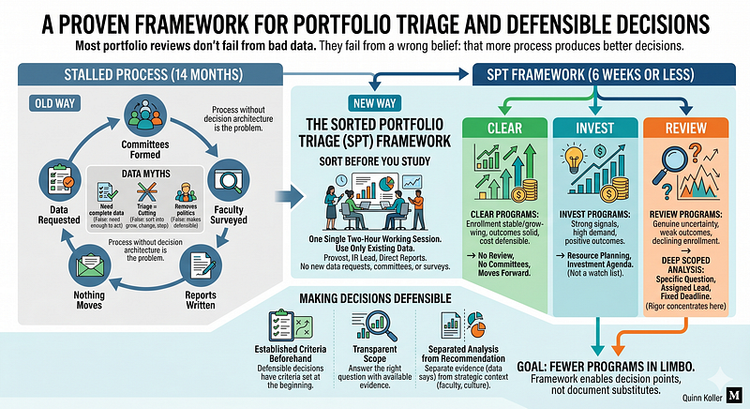
Most schools know which programs lose money. They study them anyway. Again and again.
The old belief sounds reasonable: “We need better financial data before we act.” So leaders commission another study. Another task force reviews the numbers. Another semester passes.
Here is what changes nothing: more data on programs already underwater, more committees reviewing the same math, more reports confirming what everyone knows.
Program viability is not a data problem. It is a decision ownership problem.
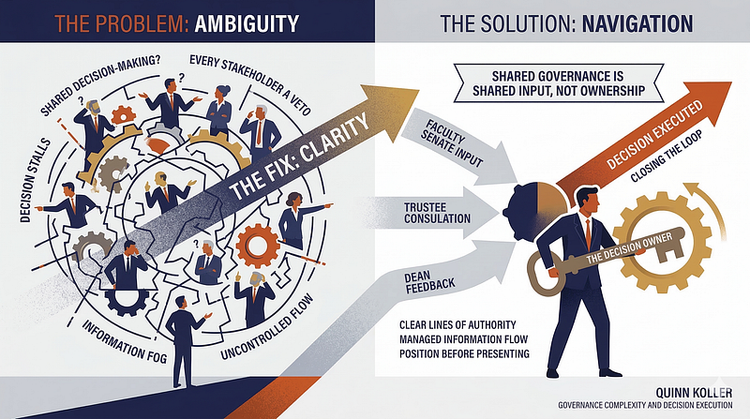
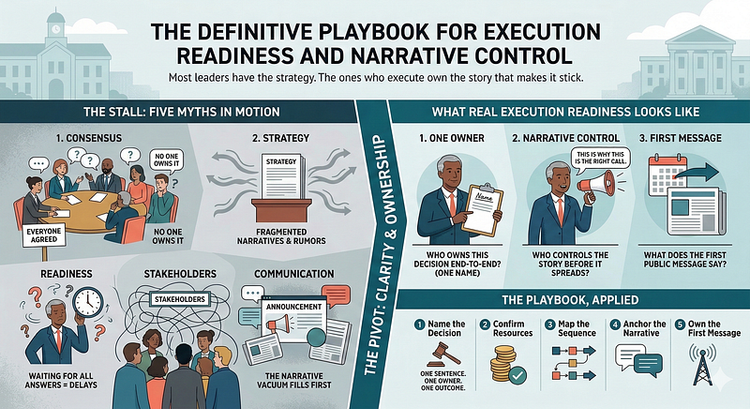
Someone has to own the call. Not the committee. Not the provost’s office. One person. Clear authority. Clear timeline. The math rarely surprises anyone. What surprises people is how long institutions study what they already know.
Better data does not fix missing authority. Clarity on who decides does.
The Three Objections That Keep Leaders Stuck
If the math is clear and the myths are debunked, why hasn’t anything changed? Because three objections keep surfacing. Each one feels responsible. Each one protects the status quo.
“We don’t have clean enough data yet.” You have enough. Enrollment trends, completion rates, cost per section. Waiting for perfect data is how programs bleed for three more years.
“Faculty will push back.” They will. But faculty push back harder when cuts feel sudden. Early conversations with real numbers earn more trust than last-minute announcements. Transparency now prevents crisis later.
“We’re already reviewing programs.” Review is not action. If a program has been “under review” for two years, that is a signal. It means no one owns the outcome. Review without a decision date is just organized delay.
The status quo has a cost that compounds every semester. The biggest risk is not acting too early. It is waiting until someone outside your institution acts for you. Boards notice. Accreditors notice. Legislators notice.
The Truth Wins When Leaders Look at It
Program viability is not a mystery. It is math leaders choose not to run.
The data exists. The cross-subsidies are mapable. The per-program economics are calculable with the systems most institutions already own. What is missing is not information. What is missing is someone willing to own the outcome and a timeline that forces a decision.
If your institution keeps studying programs everyone already knows the answer on, that pattern has a fix. It starts with one person, one spreadsheet, and one decision date.
The truth about program economics is uncomfortable. But the cost of avoiding it is worse.
Quinn Koller is a Pragmatic Futurist and Director of Academic Strategy at Utah Valley University. Through Quinn Strategic Foresight, he advises university presidents and provosts on governance, authority, and decision execution. This article is part of the Academic Portfolio Reality series.