7 Ways Foresight Will Transform Universities by 2030
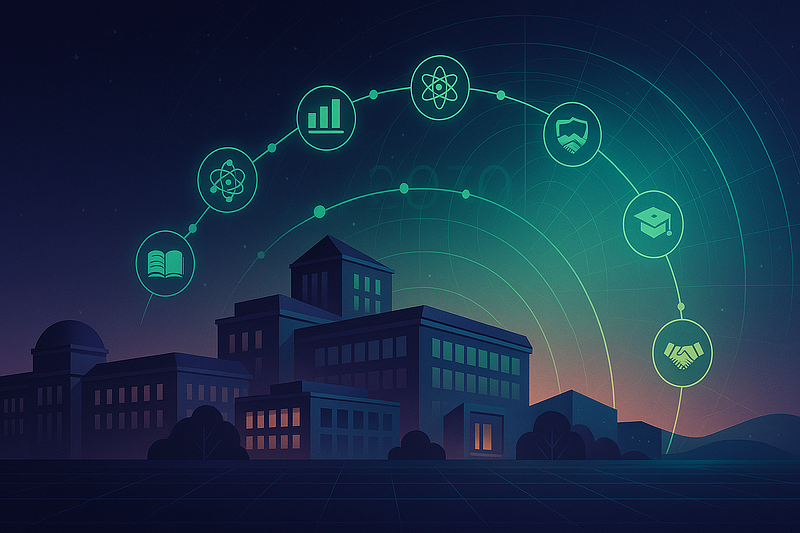
The ivory tower isn’t falling apart — it’s shifting. And long-range thinking is shaping that shift. As campuses deal with AI, shrinking cohorts, and climate pressure, the schools that plan won’t just get through it. They’ll redefine what higher education is.
By 2030, this kind of planning won’t be optional. It’ll separate the schools people trust from the ones they forget.
1. Curricula That Don’t Age Out
Curriculum reviews used to drag on for years and land already behind the times. That window is closing. The schools that scan the horizon year-round spot new tools, new jobs, and social changes early.
Imagine a computer science department adding quantum topics before they’re mainstream, or a business program weaving in ethics around synthetic biology while the field is still taking shape. Students expect this pace because they know many of their future jobs aren’t real yet. Foresight gives schools the antenna they need.
2. Enrollment Plans That Look Past the Cliff
The enrollment drop isn’t a warning — it’s here. Schools that use scenario work and demographic models are already finding new groups to serve long before the numbers hit the news.
By 2030, the smart move will be building for who’s coming next: programs for working adults, short-form learning for people changing careers, and global ties in places where demand is rising. Planning this way turns enrollment from panic into preparation.
3. Research Aimed at Tomorrow’s Problems
Money goes where the work matters. And by 2030, research portfolios shaped by futures tools will track directly with the world’s most significant issues.
Cross-impact maps, Delphi rounds, and long-range scenarios help schools spot emerging fields early — such as neuromorphic computing, carbon removal methods, pandemic-ready systems, and food system shifts. When a research office can see what’s coming, it attracts both funding and people who want to build what’s next.
4. Campuses Built to Shift
The campus of 2030 won’t be fixed to one plan. It’ll flex. Schools that are already asking future-focused questions are rethinking everything: Should they add housing or hybrid-learning spaces? What if remote formats grow again?
The campuses that get this right will work more like adaptable systems — rooms that swap roles, buildings that reconfigure, tech that scales up or down as needed. Planning this way turns uncertainty into a design tool.
5. Partnerships Aimed at the Future, Not the Past
Tomorrow’s schools won’t wait for industries to come to their doors. They’ll study where those industries are heading and build relationships early.
That means teaming up with rising climate tech labs, longevity ventures, and quantum start-ups — sectors that are about to expand fast. These ties go beyond internships. They place universities inside the circles shaping the next economy.
6. Institutions That Can Turn Crisis Into Motion
If the pandemic taught higher ed anything, it’s that resilience can’t be an afterthought. Schools that build risk scanning and scenario tests into normal operations will shift faster when shocks hit — economic swings, cyber issues, weather events.
While others pause, these schools adjust. While others lose ground, they recover and sometimes gain.
7. Graduates Who Can Think Past the Obvious
The most significant change may be in the students themselves. Futures literacy — the skill of thinking beyond the immediate — will be threaded through every field.
By 2030, business students will map multiple paths for global markets. Engineers will design for more than one tech future. Humanities students will track how cultural values might shift and why that matters. These graduates won’t just respond to change; they'll drive it. They’ll help steer it.
The Bottom Line
By 2030, the split between schools that use long-range thinking and those that stick to old habits will be clear. The first group will stay relevant. The rest will drift.
The shift has already begun. The question isn’t whether the future is coming — it’s whether your institution plans for it or reacts late.
Learn More
Explore foundational resources in strategic foresight and futures studies: